I. What is Boron Carbide?
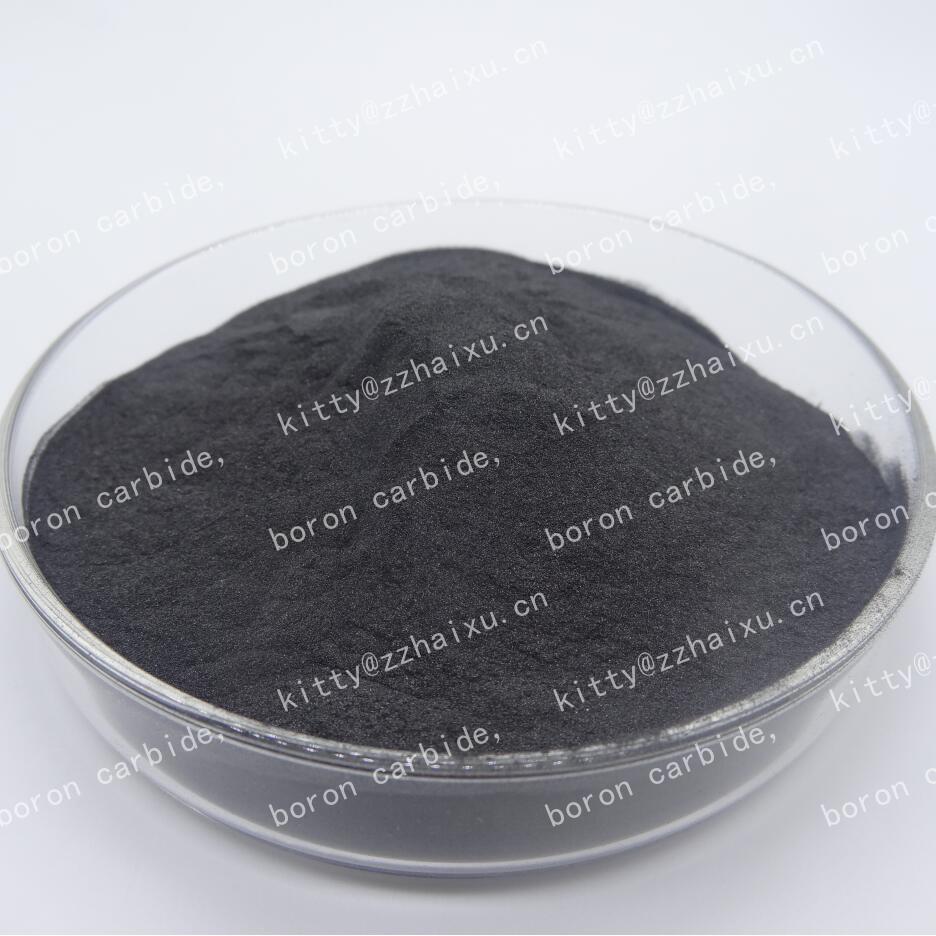
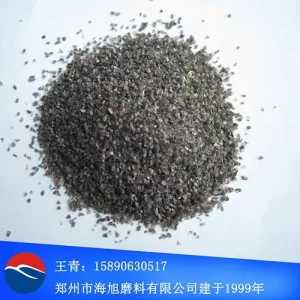
Borne carbide, with the chemical formula B₄C, commonly known as black diamond, is a high-performance inorganic superhard ceramic material. It ranks among the top three hardest materials in nature, second only to diamond and cubic boron nitride, with a Mohs hardness of approximately 9.5 and a Vickers hardness exceeding 30 GPa. It appears as black, lustrous crystals, with a grayish-black powder. It is an indispensable special material in industrial and cutting-edge technology fields.
It possesses several excellent comprehensive properties: a density of only 2.52 g/cm³, making it lightweight; a high melting point of 2350℃ and a boiling point of 3500℃, exhibiting extremely strong high-temperature resistance; excellent chemical stability, insoluble in water and common acid and alkali solutions at room temperature, only susceptible to corrosion by molten alkali; and a large thermal neutron capture cross-section, possessing unique neutron absorption capabilities, and outstanding wear resistance, pressure resistance, and impact resistance. Industrially, it is mainly prepared by high-temperature reduction of boron anhydride and carbon in an electric arc furnace.
II. Main Applications of Boron Carbide
With its multiple properties including superhardness, lightweight, high temperature resistance, corrosion resistance, and radiation protection, boron carbide is widely used in several core fields such as military, nuclear power, industrial processing, aerospace, and metallurgy. Specific applications are as follows:
1. Military Protection: Core Material for High-End Bulletproof Armor
This is one of the most crucial high-end applications of boron carbide. Compared to traditional metal armor, boron carbide has higher hardness, lighter weight, and excellent ballistic resistance, effectively resisting bullet and fragment impacts. It is often made into bulletproof inserts and bulletproof ceramic plates for military bulletproof vests and individual soldier protective equipment. It is also widely used in the protective armor of tanks, armored vehicles, and military aircraft, significantly reducing equipment weight while substantially improving protection levels, meeting the needs of modern lightweight military equipment.
2. Precision Machining: Superhard Abrasive and Wear-Resistant Parts
As a top-tier superhard abrasive, boron carbide can process hard and brittle materials such as cemented carbides, ceramics, sapphire, and quartz, which are difficult for diamond to work with. It is commonly used in precision grinding, polishing, drilling, and lapping. It can also be used to manufacture wear-resistant nozzles, wear-resistant molds, sealing rings, bearings, and other industrial wear-resistant parts, with a service life far exceeding that of ordinary cemented carbide. It is widely used in machinery manufacturing, optical processing, and semiconductor precision machining industries.
3. Nuclear Power Industry: Neutron Absorption and Radiation Protection Materials
Borne carbide possesses extremely strong neutron trapping capabilities, a large neutron absorption cross-section, and is resistant to high temperatures, chemically stable, and produces no secondary pollution. It is a core safety material in the nuclear power industry. It is mainly used to manufacture nuclear reactor control rods, shielding components, and neutron absorption barriers, enabling precise control of nuclear reaction rates, blocking nuclear radiation, and ensuring the safe operation of nuclear power plants and nuclear testing facilities. It is a key functional material for nuclear power protection.
4. Metallurgical Industry: Deoxidizer and Additive
In the steel and alloy smelting process, boron carbide can be used as a highly efficient deoxidizer and boron additive. It can remove oxygen and sulfur impurities from molten steel, refine metal grains, significantly improve the hardness, toughness, and corrosion resistance of steel and cemented carbide, and optimize the overall performance of alloys. It is commonly used in the production of high-end special steels and wear-resistant alloys.
5. Aerospace and High-Temperature Industries
Leveraging its excellent high-temperature resistance, thermal shock resistance, and lightweight properties, boron carbide can be used to manufacture thermal protection components and high-temperature insulation parts for aerospace vehicles, resisting high-altitude temperatures and airflow impacts. It can also be used in refractory ceramic components for high-temperature kilns and industrial heat treatment equipment, adaptable to various extreme high-temperature conditions.
6. Other Special Applications
It can be used to manufacture corrosion-resistant special ceramic parts for chemical corrosion protection equipment; it can also be used as brake powder and special coating raw materials for high-end braking equipment and wear-resistant and corrosion-resistant coating processing, adaptable to the special material needs of various extreme working conditions.